
REASONS TO BUY
Built-in lock tab for easy installation of window kit
Auto-swing airflow direction option
Good value
REASONS TO AVOID
Single hose design
Doesn't come with foam to seal window

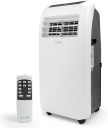 This Product SereneLife SLPAC10 | |||||
|---|---|---|---|---|---|
| Awards |  Best Portable Air Conditioner On a Budget |  Best Overall Portable Air Conditioner | |||
| Price | $350 List $295.99 at Amazon | $633 List $551.85 at Amazon | $330 List $349.00 at Amazon | $339 List | $431 List |
Overall Score  |
|||||
| Star Rating | |||||
| Bottom Line | This portable AC is easy to install and even easier on the budget | This powerful portable air conditioner has more cooling capability and innovative features than any other to help you beat the summer heat | This versatile unit goes easy on the wallet in terms of power-consumption and purchase price | This portable AC is a breeze to set up and take down and demonstrates excellent energy efficiency, but it's loud and underperforms in cooling | This portable air conditioner is easy to cart or carry around and set up; just don't expect tons of cooling power |
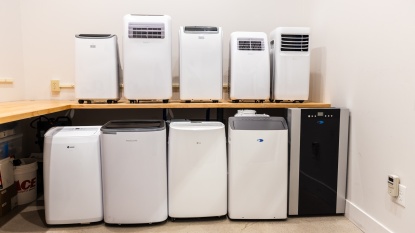
| Rating Categories | SereneLife SLPAC10 | Whynter ARC-1230WN | Black+Decker BPACT08WT | Midea MAP08R1CWT | SereneLife SLPAC8 |
| Cooling (35%) | |||||
| Energy Consumption (15%) | |||||
| Noise (20%) | |||||
| Portability / Install (25%) | |||||
| Convenience (5%) | |||||
| Specs | SereneLife SLPAC10 | Whynter ARC-1230WN | Black+Decker BPACT08WT | Midea MAP08R1CWT | SereneLife SLPAC8 |
| Manufacturer Recommended Cooling Area | Up to 450 sq ft | Up to 600 sq ft | Up to 150 sq ft | Up to 350 sq ft | Up to 350 sq ft |
| Single or Dual Hose | Single | Dual | Single | Single | Single |
| Wi-Fi / App Enabled | No | Yes | No | No | No |
| Modes (fan speeds) | - Cold (1-3)
|
- Cold (1-3 + Auto)
|
- Cold (1-3 + Auto)
|
- Cold (Auto)
|
- Cool (Low, High)
|
| Energy Star Certified | No | No | No | No | No |
| BTU | 10000 BTU (ASHRAE) 6000 BTU (DOE) |
14000 BTU (ASHRAE) 12000 BTU (DOE) |
8000 BTU (ASHRAE) 4000 BTU (DOE) |
8000 BTU (ASHRAE) 5300 BTU (DOE) |
8000 BTU (ASHRAE) 4000 BTU (DOE) |
| 24-Hour On/Off Timer | Yes | Yes | Yes | Yes | Yes |
| Control Type | Button | Button | Touch | Button | Button |
| Remote Control | Yes | Yes | Yes | Yes | Yes |
| Washable Dust Filter | Yes | Yes | Yes | Yes | Yes |
| Manufacturer Window Width Minimum | 26.7" | 26.7" | 20.5" | 19.4" | 26.7" * |
| Manufacturer Window Width Maximum | 50.1" * | 49" | 59" | 62.2" | 50.1" * |
| Measured Window Kit Width | 4" | 9.8" | 6.5" | 6.5" | 4" |
| Refrigerant Type | R410a | R32 | R32 | R32 | R410a |
| Child Lock | No | Yes, for the remote only | No | No | No |
| Manufacturer Dehumidify/Moisture removal | 3.1 pt/hr | 87 pt/day | Not Specified | Not Specified | 2.5 pt/hr |
| Measured Weight | 52 lbs 4 oz | 75 lbs 1 oz | 46 lbs | 50 lbs 14 oz | 44 lbs 3 oz |
| CEER | 6.6 | 12.3 | 5.4 | 6.5 | 5.7 |
| Estimated Summer Cost | $167.34 | $216.15 | $156.88 | $132.48 | $125.50 |
| Average dBa Reading on High | 61 | 58.4 | 58.6 | 60.2 | 63.7 |
| Difference of averaged temps | 6.3 | 11.9 | 7 | 5.4 | 4.9 |
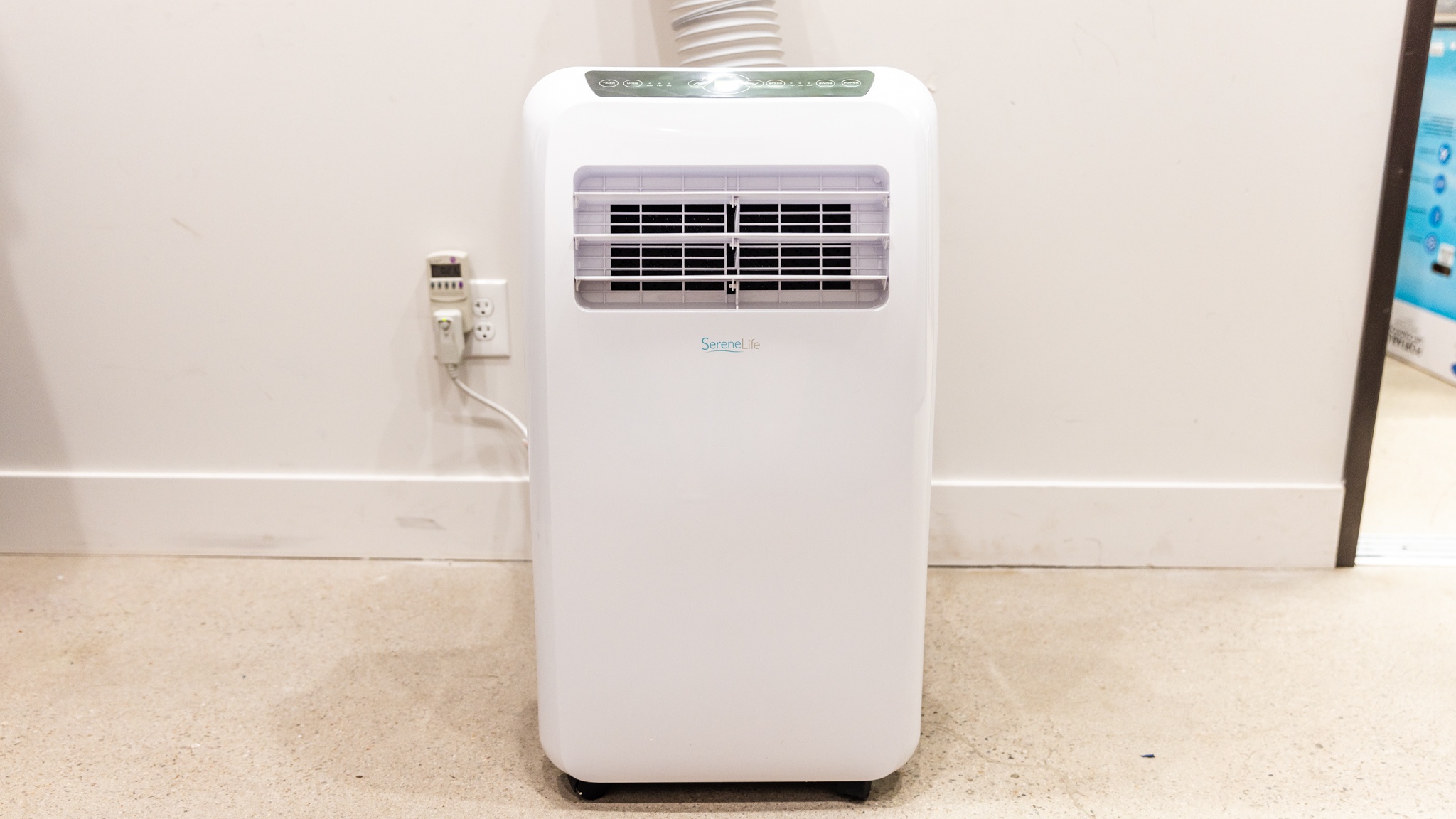
The SereneLife SLPAC10 is a solid 10,000 BTU portable air conditioner with a much better window interface kit for its hose than other units. Setting this thing up and taking it down is a breeze compared to nearly every other portable AC we tested, and thanks to its relatively low weight, excellent handle placement, and smooth-rolling wheels, it's easy to move anywhere needed.
This metric evaluates the real-world cooling capability of portable ACs. The SereneLife SLPAC10 came in slightly below average as a medium-powered 10,000 BTU unit.
For this test, we recreated summertime conditions in our test room, using space heaters to raise the temperature to just over 82 degrees. In this room we used data loggers to log the temperature over 60 minutes to see how much the temperature had dropped and how quickly. Before measuring the drop in temperature, we installed the single hose window interface kit that came with the SLPAC10.
After leaving the SLPAC10 in the room on its highest settings for 60 minutes, the air temperature dropped to 75.8 degrees Fahrenheit. That's a decrease of 6.3 degrees.
There were hardly any other units that outshone the SereneLife SLPAC10 in this metric for its quick installation and excellent portability. For this metric, we tested each unit's ease of use in both portability and installation.
We weighed the SereneLife SLPAC10 at just over 52 pounds and liked the handle placement and depth. Although the weight of the unit is concentrated on the right side, it felt fine to carry, and we didn't have much trouble getting it upstairs compared to some of the more cumbersome units. Rolling on hard floors is smooth and free of any steering or tipping issues. The same goes for short to long pile carpet, but rolling resistance increases, as you'd expect.
Similar to its sister unit, the SLPAC8, installing the SLPAC10 is quite simple and can be completed in almost five minutes with just a few basic tools. The included instructions are a bit vague, but it's easy to look at the parts and pieces and figure out what they are talking about. We appreciated that we didn't need to trim any foam gaskets for this installation, but depending on your window length, you might need to trim the panel before sliding and locking it into place. The hose attaches to the window kit with one screw, although the manual failed to mention it.
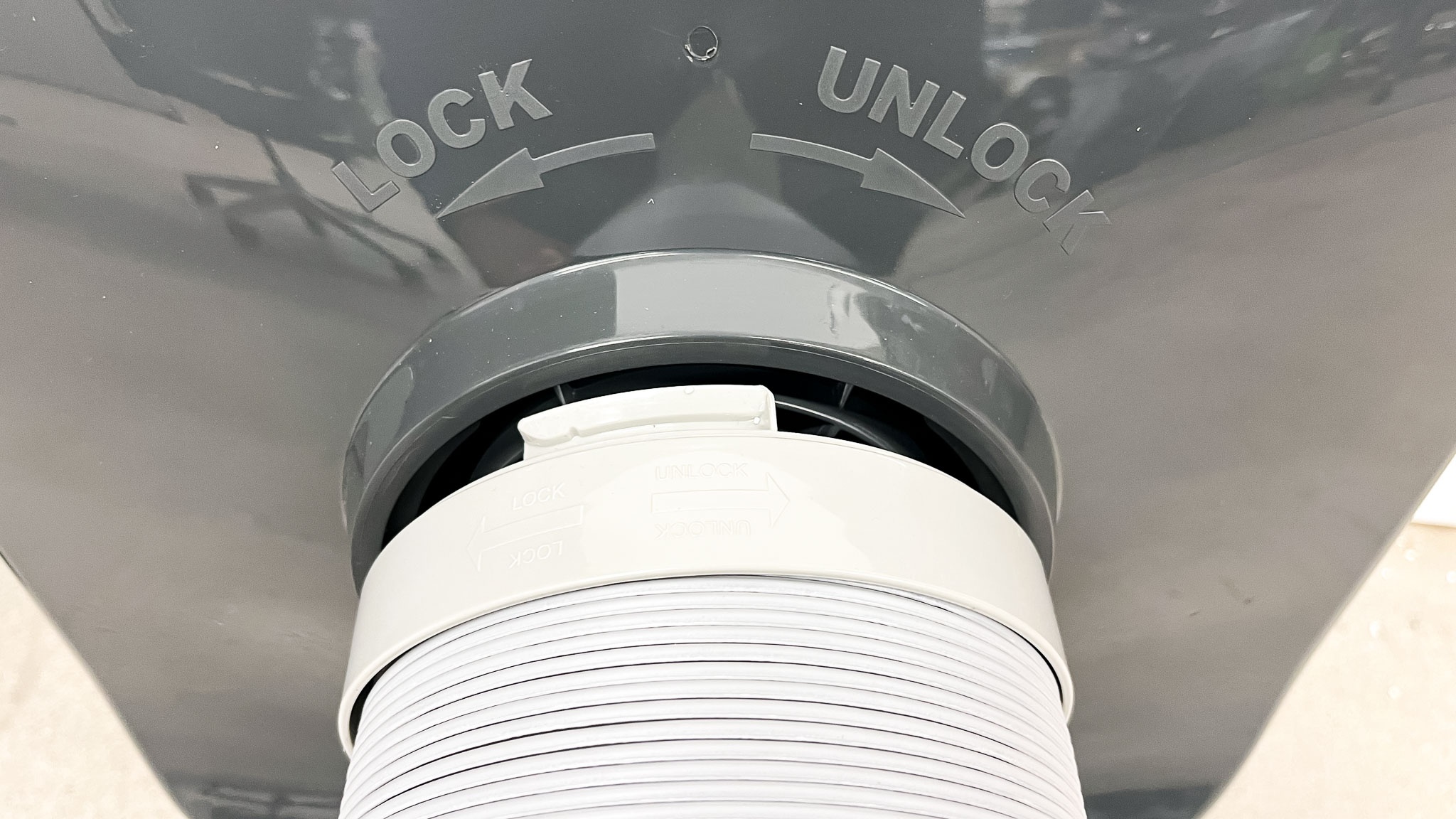
We loved how easy and convenient it is to pack up the SereneLife SLPAC10 when ready to move it to another room or put it away for the season. Simply unlock the tabs on the window kit to remove it, unscrew the hose from the window panel, and then twist the hose to remove it from the back of the AC. There is no onboard storage for the window kit or the hose, just a bracket to wrap the power cord around.
This metric scores each portable AC's decibel level while on its highest setting. The SereneLife SLPAC10 didn't wow us in this metric, scoring in the middle of the pack for all of the units we tested.
In order to test the sound of the SereneLife we set up an SPL meter and also used our own subjective listening to give our opinions on how unpleasant each unit may sound and also the decibel reading. We used these tests for each unit's low, medium, and high settings.
This unit produces 61 dBa according to our SPL meter when running the fan on high. The fan sounds average compared to other units, but the compressor sounded a bit annoying and contributed to the unit's lackluster score here.
AC units with lower power consumption are better for the power grid, environment, and are far easier on our wallets. That's why the energy metric comes in at 15% of the overall score for every unit in this category. The 10,000 BTU SereneLife SLPAC10 performed slightly above the average for all portable ACs tested in this metric.
In order to obtain reliable and consistent energy consumption data, we tested each unit with its fan on the highest setting and ran the compressor for 60 minutes while measuring energy output in Kilowatt Hours (KWh) using a watt meter. Then, to figure the cost of running the AC for 12 hours a day over three months, we measured the electricity costs and KWh consumption during that time period. However, these measurements are exact, and we are aware that most users will use their compressors more irregularly, which could result in more or less power.
Within an hour, the SereneLife SLPAC10 consumed .96 kWh of power. Over three months, with the assumption that a user would have their AC on for about half a day, that is a projected 1036 kWh of power used and approximately $167.34 in electricity costs. This places the SereneLife as a middle-of-the-road power consumer compared to the rest of the group but slightly above average.
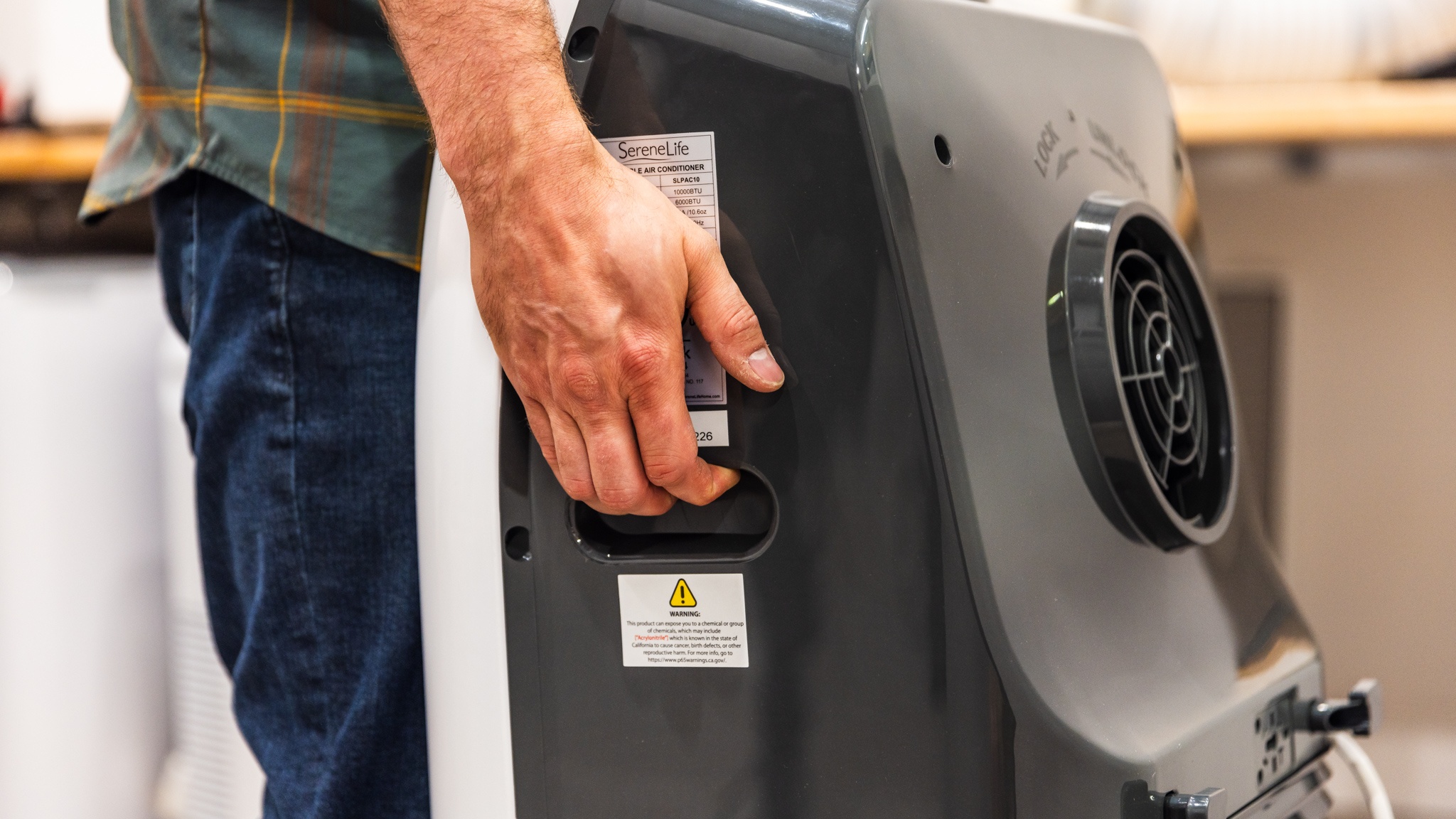
This metric grades each portable AC unit on its features and interface that have a positive bearing on its ease of operation. The SereneLife SLPAC10 was fairly average in this regard.
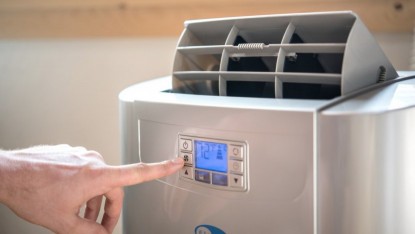
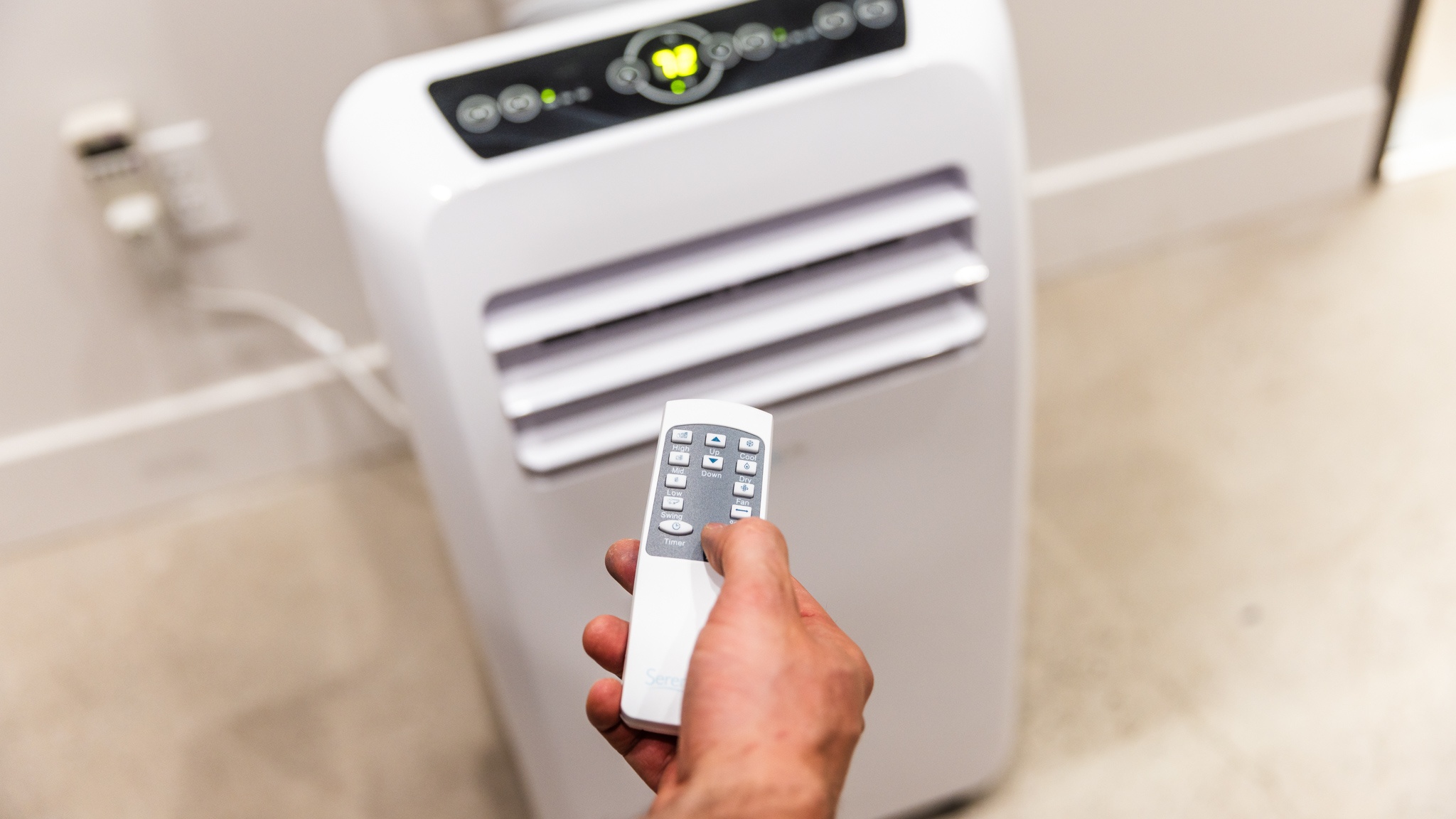
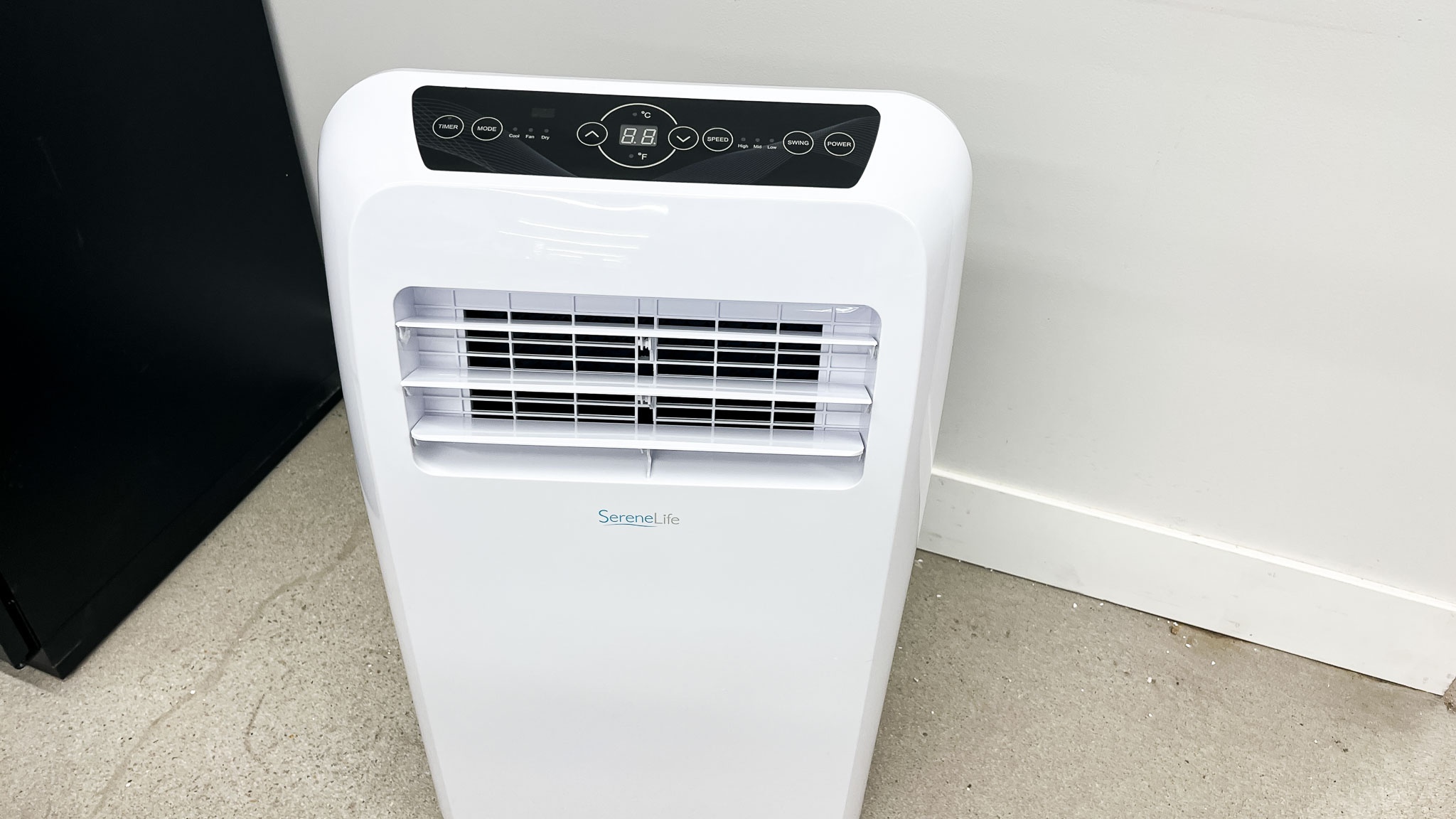
It has all of the functions necessary to run it, like vertically adjustable air vents, including an automatic swing feature to move air around the room more evenly. It comes with common modes, a remote control, and a highly legible screen, but the SereneLife SLPAC10 is missing standout innovative features and conveniences that set apart the higher-scoring units in this metric.
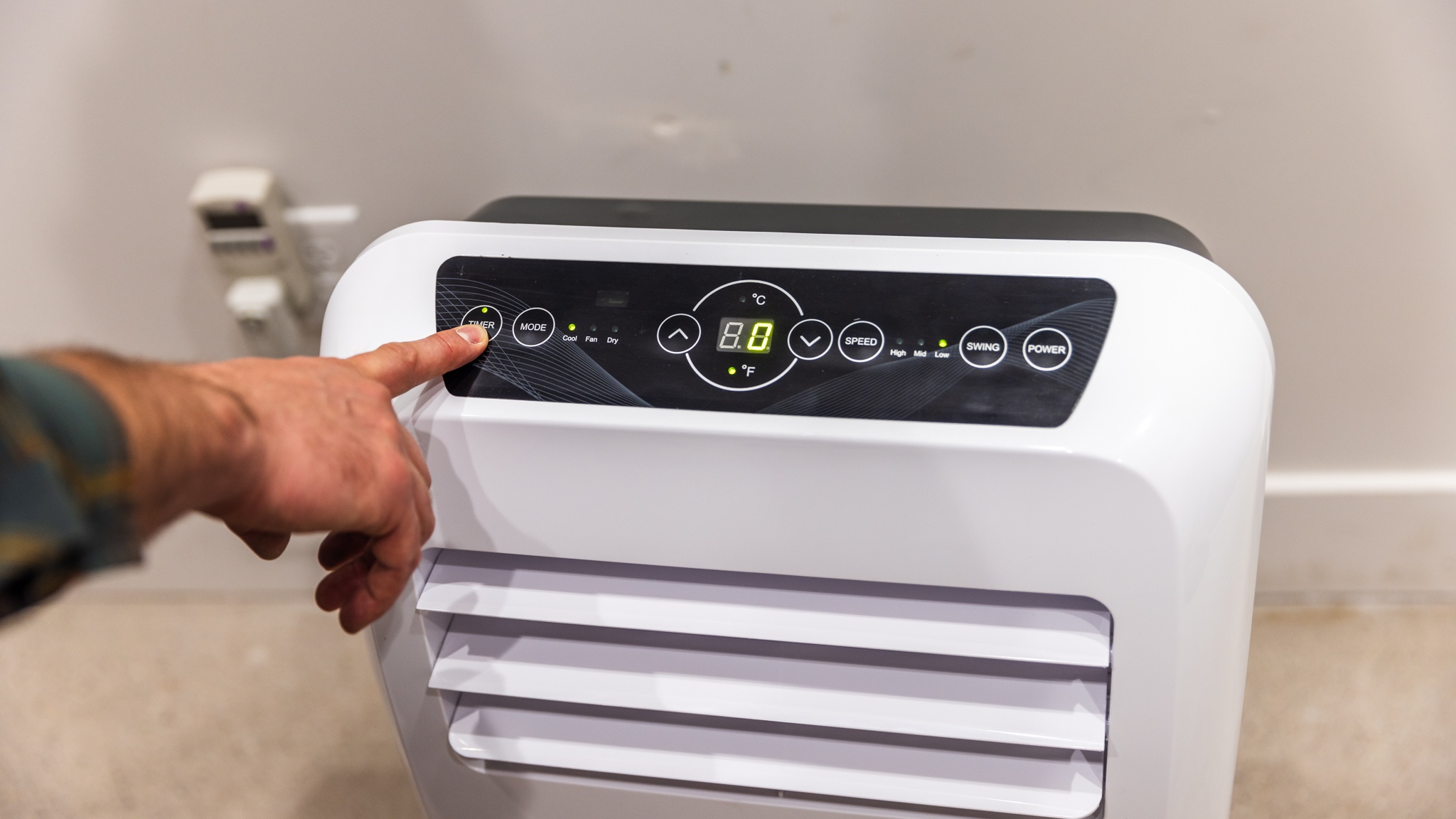
As long as you don't need to cool down a very large or scorching hot space, the SereneLife SLPAC10 should meet your needs and then some. It's super easy to set up and take down and one of the easiest units to move around a home, but keep in mind that it works best with average-sized windows. Too large or too small, and the SereneLife SLPAC10's hallmark sliding window interface may be incompatible.